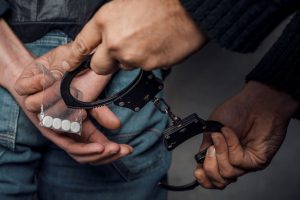
People often describe a Charter challenge as getting off on a technicality. That framing gets it backwards. The Charter sets limits on how the state is allowed to investigate people, and a challenge asks a court to decide whether the police stayed inside those limits.
In drug prosecutions, that question is frequently the whole case. The substance itself is rarely in dispute. What is in dispute is how the police came to find it.
Where the evidence came from matters as much as what it is
A drug charge normally rests on physical evidence seized during a search, along with anything found alongside it: cash, scales, packaging, phones. If that search was unlawful, the defence can apply to have the resulting evidence excluded from the trial.
When exclusion succeeds in a drug case, the Crown is often left with nothing to prove its case with, and the charges do not survive. That is why the lawfulness of the search is usually the first thing an experienced defence lawyer examines in the disclosure.
Section 8 and the law of search
Section 8 of the Charter protects against unreasonable search and seizure. A warrantless search is presumed unreasonable, and the Crown carries the burden of justifying it.
Where a warrant was obtained, it is not immune from challenge. The defence can examine the sworn information the officer used to get it and argue that, properly scrutinized, it did not establish the grounds it claimed to. Informant reliability, stale information, and material omissions all come up. If the warrant should never have issued, the search conducted under it was warrantless in law.
Searches justified as incident to arrest depend entirely on the arrest itself being lawful. If the arrest was not, neither was the search that followed.
Detention and the right to counsel
Section 9 protects against arbitrary detention. Section 10 requires that a detained person be told promptly why, and be informed of the right to counsel and given a reasonable opportunity to exercise it before questioning continues.
These come up constantly in drug files. A vehicle stop conducted for a traffic purpose can become an investigative detention without the legal grounds for one. A person can be held at a roadside long enough that the interaction is a detention in law even though nobody used that word. A right to counsel caution can be read but the actual call delayed until after a statement has been taken.
Statements obtained after a section 10 breach are frequently excluded. So is evidence discovered as a result of them.
The issues that recur in drug files
Across drug prosecutions in the Lower Mainland, a relatively short list of problems accounts for most successful applications:
- A traffic stop used as a pretext for an investigation there were no grounds to conduct
- Grounds for arrest that do not hold up once the officer is examined on them
- Warrant applications built on unverified or dated informant information
- Searches that go beyond the scope the warrant authorized
- Delay in facilitating contact with counsel before questioning
- Sniffer dog deployment without the reasonable suspicion required
- Residential entries where the authority to enter is doubtful
- Detention that continues well past any lawful purpose
Finding a breach is only half the argument
A court that finds a Charter breach does not automatically exclude the evidence. Section 24(2) requires a further analysis, and the test set out by the Supreme Court in R. v. Grant weighs three things: how serious the state conduct was, how badly it affected the accused person’s protected interests, and society’s interest in having the case decided on its merits.
That is why the seriousness of the breach matters so much. A minor procedural slip made in good faith may not lead to exclusion. A deliberate or reckless disregard of Charter limits, or a pattern of similar conduct, points strongly the other way. Building the record on that point is a substantial part of the work in a contested application.
Delay is a separate Charter issue
Section 11(b) guarantees trial within a reasonable time. The Supreme Court in R. v. Jordan set presumptive ceilings for how long a case should take from charge to the end of trial, and cases exceeding them can be stayed unless the delay is explained.
Drug prosecutions involving wiretaps, expert evidence or multiple accused are particularly prone to running long. Tracking the delay and its causes from the first appearance is part of defending the file properly.
Why the early steps matter
Charter arguments are built from disclosure: the police notes, the warrant materials, the audio and video, the timing of every event. Obtaining complete disclosure and reviewing it carefully is where these applications are won or lost. It is also work that becomes harder the later counsel is retained, which is one reason to get legal advice early rather than after the first few court dates have passed.
If you have been charged, a few things help considerably:
- Say nothing about the allegations to police beyond identifying yourself, and ask to speak with a lawyer
- Write down everything you remember about the stop, the arrest, and the search while it is fresh
- Note the times: when you were stopped, when you were arrested, when you were told about counsel, when you actually spoke to one
- Keep every document you were given, including release conditions and receipts for seized property
- Do not discuss the case on the phone from custody, since those calls are recorded
Speak with a Vancouver criminal defence lawyer
Michael Bloom is a former Crown prosecutor who now defends criminal charges across Vancouver, Surrey, Langley and the Fraser Valley. That background is directly useful here, because knowing how the Crown builds a drug case is how you find the weaknesses in one. You can also read more on what the Crown must prove in a possession case.
The initial consultation is free. Call 604.603.5513 or contact the office to discuss your case.
This article is general information about criminal procedure in British Columbia and is not legal advice. Reading it does not create a lawyer-client relationship, and every case depends on its own facts.